

Form Us With Love and EasyMining explore innovative circular uses for a materials by-product (ICON MAGAZINE)
The furniture designer and self-confessed “wood nerd” talks to Katie Treggiden about his workWe are running out of sand. That might sound like a ridiculous thing to say when you think about the copious amounts of sand in the world’s deserts, but it turns out that there’s sand, and then there’s sand. The sand we need for most contemporary applications, such as concrete, glass and silicon, to name but a few, needs to be angular. Desert sand is eroded by the wind and that makes it too smooth to lock together to form something like concrete.What we tend to use instead is water-eroded sand sourced from riverbeds, lakes and coastlines. But growing demand is such that rivers, lakes and beaches are dredged and farmland and forests uprooted for the sand that lies beneath them, causing untold damage to natural environments. And the two most common constituents of sand are silica, usually in the form of quartz, and calcium carbonate, created over millions of years from lifeforms such as coral and shellfish, so it’s not renewable. At least not within human timescales.Sand scarcity has become such a problem that, according to a study by a mining crimes professor at the National Police Academy in Brazil, illegal sand mining is ‘bigger than all other environmental crimes combined’. A whole beach was stolen to the south of Mumbai in a series of overnight raids in 2004.But there are other sources of sand. EasyMining describes itself as an ‘innovation company dedicated to closing nutrient cycles’ and is owned by the Swedish waste management company Ragn-Sells. It has been recovering phosphorus from ash and sewage sludge since 2007 – it’s an energy-efficient and circular way to generate an in-demand fertiliser, but when fully scaled up, it will generate approximately 45,000 tonnes of a certain by-product per year – sand.

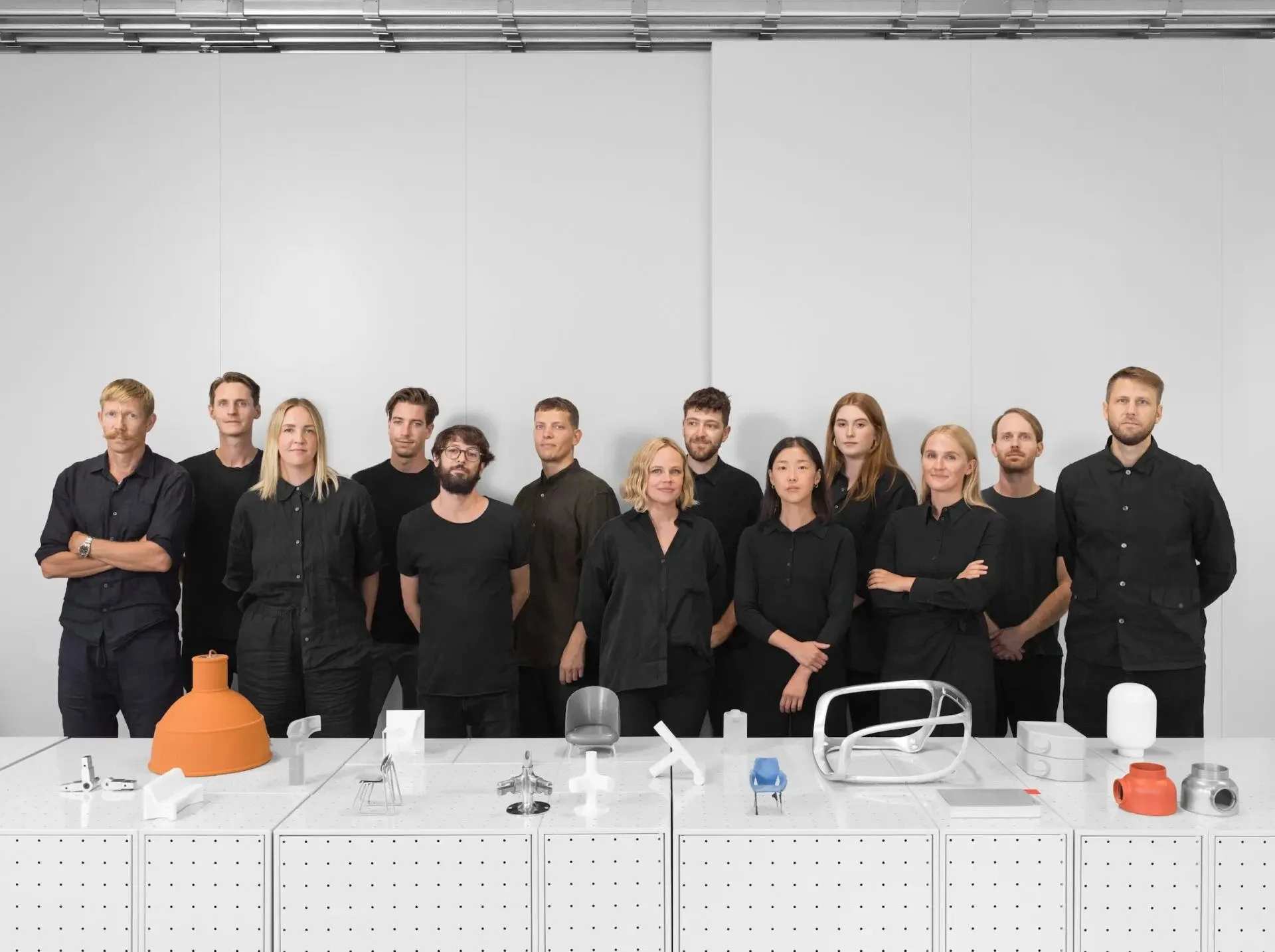
‘Once we had a solid grasp of the material and its potential, we took the next step, by reaching out to producers who could partner with us to create sample products,’ says the studio. ‘This was a crucial phase in our approach, as it marked the transition from conceptualising ideas to putting them into practice.’