The Joy of Waste (Crafts Council)
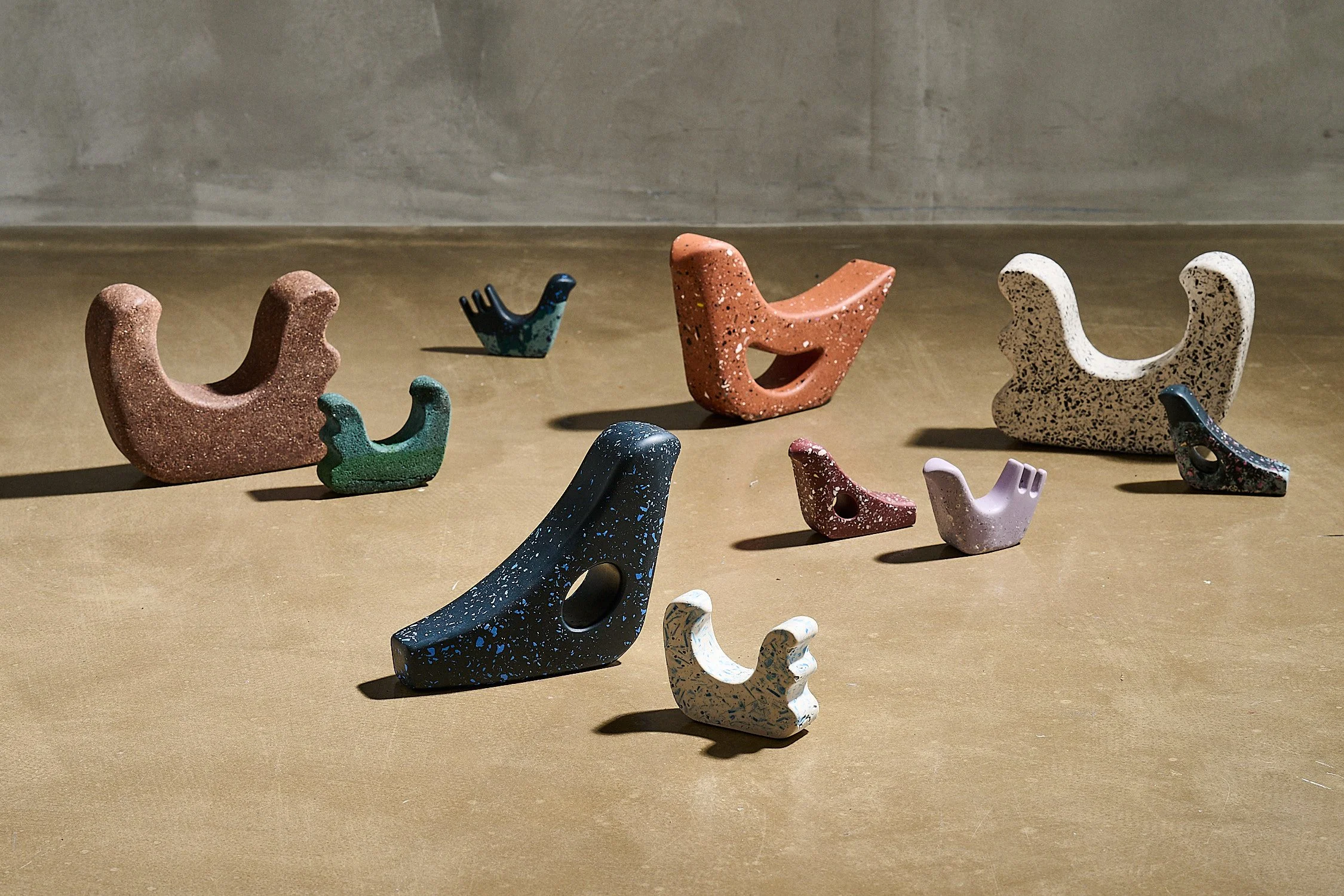
Image: Second Song Birds by Spared.
Designers working with waste are often motivated by the depletion of natural materials and a sense of guilt and duty towards environmentalism. But things are changing. Katie Treggiden speaks to five designers for whom second life materials spark joy and curiosity.
“I had to have some of those materials,” grins co-founder of Prima Materia, Jeremy Hulse. “I didn’t know how I was going to use them, but I’d figure that out.” He is reflecting on the moment that got him hooked on working with waste. Studio Tip had curated an exhibition called Tip Takes for 2024’s Material Matters, for which co-founders Katie-May Boyd and Charlotte Kidger had artfully displayed objects and materials salvaged from the redevelopment of French Railways House, designed in the early 1960s by architect and designer Charlotte Perriand. According to DEFRA, the construction and demolition industry produces more than half of UK’s waste. They wanted to change that but knew they couldn’t do it alone. They gave each object a QR code detailing the sort of specifications designers expect from virgin materials and invited visitors to take them home. They only caveat? They had to share a creative vision and follow up six months later to report how they’d got on.
“There were a lot of really exciting materials, including cast glass bricks, marble and bright orange engine cages from the old lifts,” says Jeremy. “The possibilities felt super inspiring.” Without a car, Hulse convinced a friend to help him take them as far as his studio on the bus. “Then I would strap one thing to my back each night and cycle home,” he says. “I made a coffee table and a mirror and noticed how much joy I found in the process.”
He co-founded his own studio with Sophie-Claire Turner, naming it after the base materials that alchemists once endeavoured to turn into gold, and now spends a lot of time on construction sites. “It made me realise how much potential there is in the space between demolition and redevelopment,” he says. Back at Material Matters two years on, he and Sophie launched Demolition to Design. They crafted the furniture collection from windowsills and doorframes salvaged from One Museum Street in Holborn. Despite being solid oak, it was littered with screws and nails, making it difficult to process. After many false starts, their team came up with the idea of using a hole drill to core out the metalwork and surrounding wood and then filling the holes with wooden dowels. “We wanted to introduce more playfulness to the repair, inspired by visible mending techniques such as kintsugi, so we dyed the dowels. That way, however we cut the timber, these little moments that share the history of the material are revealed.” The result is a collection that tells its story with a smile.
“It made me realise how much potential there is in the space between demolition and redevelopment”
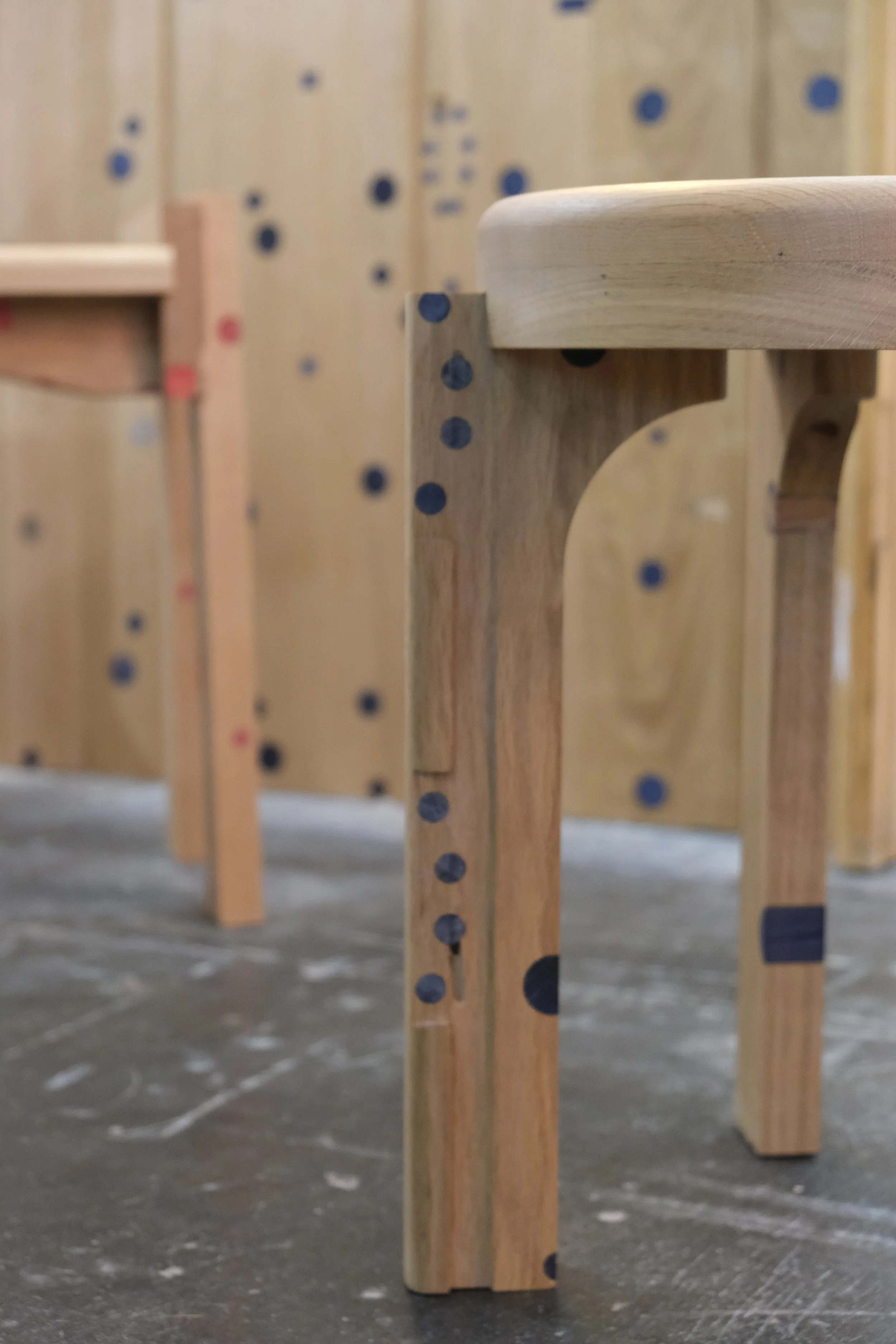
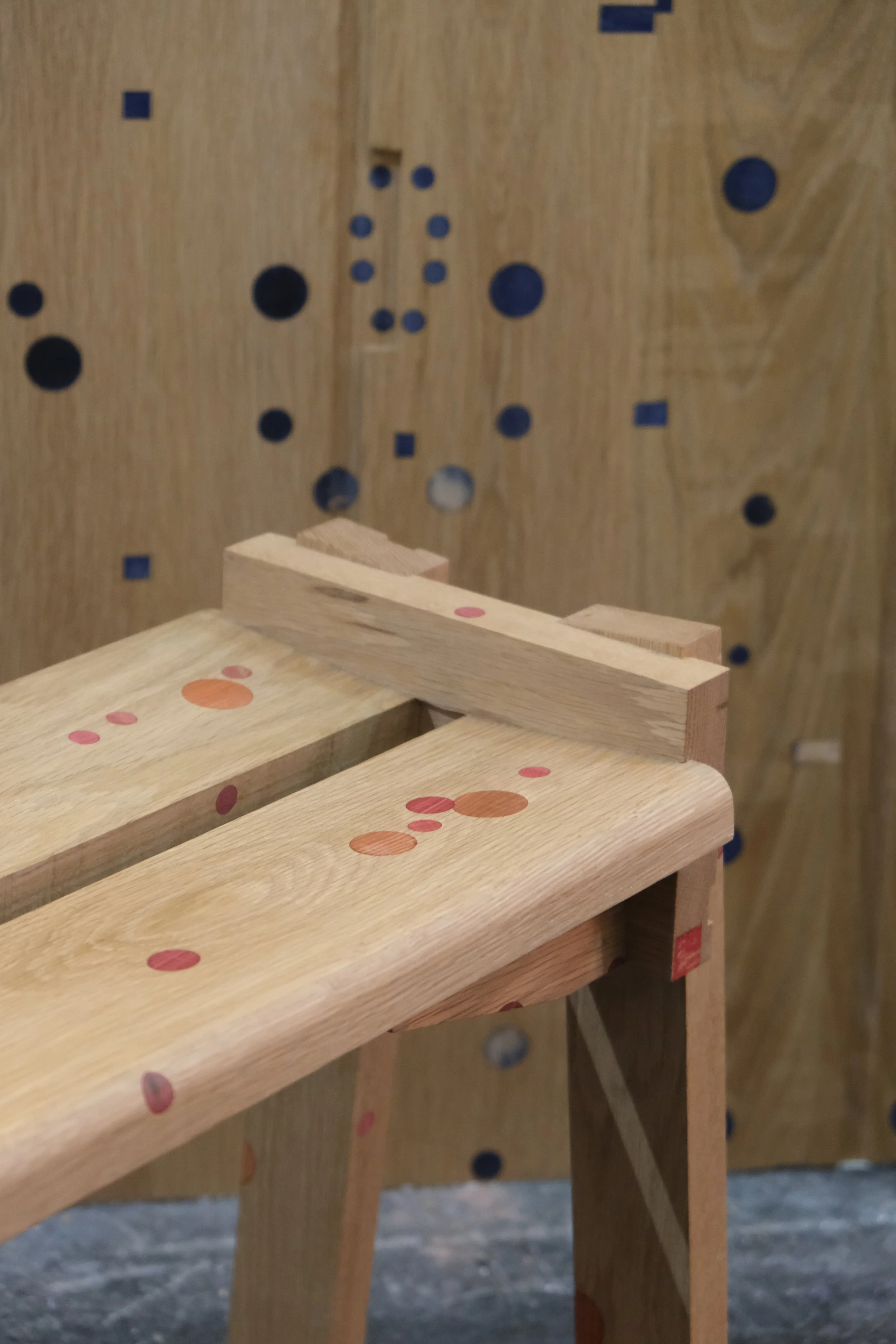
Image: Demolition to Design by Prima Materia
There is a long and global history of inventive repair and reuse from kintsugi, boro and sashiko in Japan to gambiarra in Brazil, zizhu chaungxin in China, jua kali in Kenya, kantha in Bangladesh and West Bengal, Tripura and Odisha, and the Indian practice of jugaard. Many of these practices are entangled with the poverty and material scarcity that necessitated their emergence, and their appropriation by wealthy, white Westerners can be problematic. Even patchwork traditions in Europe and North America and Britain’s wartime ‘make do and mend’ practices were a source of shame for some and a leisure activity for others. But as waste piles up around us, these ways of thinking are gaining traction. ‘Jugaard is about finding solutions to problems by taking an innovative and non-linear approach,’ says Indian-born, London-based textiles designer Kangan Arora. ‘It is a state of mind that rejects wastage and assumes everything is repairable by making materials and tools perform far beyond their intended use.’ It’s in this innovative and non-linear approach that Jeremy finds creative fulfilment—and he’s not the only one.
Designer and environmental strategist, Alexie Sommer and cabinetmaker and designer Quentin Delion launched Useful Totem—a collection of sculptural tableware—at the same exhibition. Inspired by a desire to store leftover food without clingfilm, the decorative stacks comprise pre-loved glassware, lids hand-turned from wooden offcuts and cork disks made from reprocessed wine bottle corks. “It's always exciting to find a beautiful piece of vintage glass,” says Sommer, who sources the containers from ‘brocantes’ and flea markets in France as well as online. “I look for the colour and shape—it has to feel right—and when I find a piece that works it's like finding treasure.” While significantly pricier than clingfilm or Tuppaware, Useful Totem has less than 5% of the embodied carbon footprint of similar objects made from virgin materials, but that’s not necessarily what will motivate change. “I hope people will feel a wholesome sense of happiness when they see and use this collection,” says Alexie.
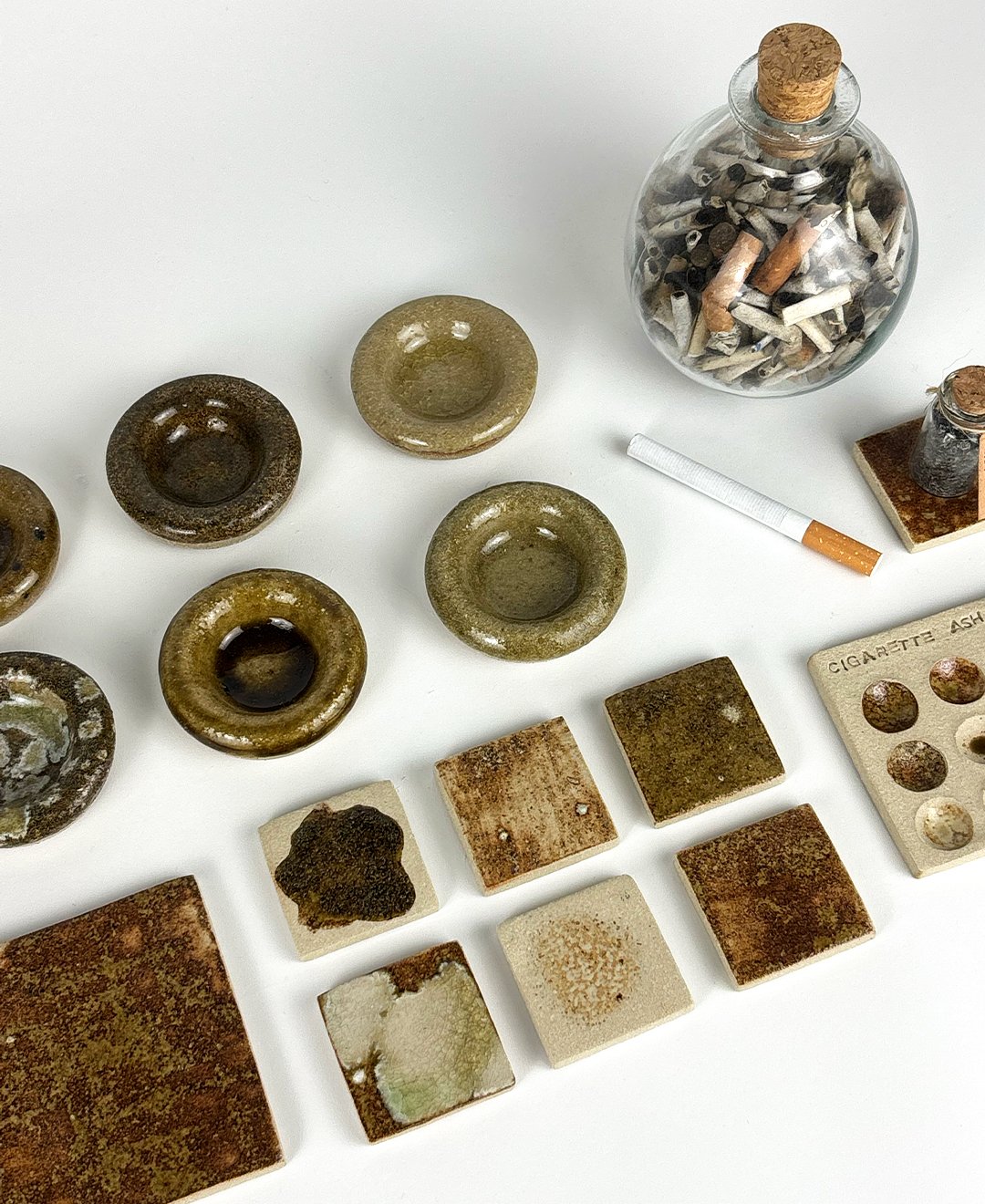

Images: Perpetual Ash by Neve Beill & Thames Matter, Fragment 1.2 by Neve Beill
For Callie Tedder-Hares, working with waste was a way out of despair. During a river clean with environmental charity Thames21, she and her team were shocked by how much waste they found. “I went through a period where I didn’t want to be a designer anymore—I didn’t want to make more stuff,” she says. “I sat with those feelings and realised we could change our practice.” She and co-founder Emma Lally launched Spared, a sister studio to their existing design agency Volume Creative, that now turns their clients’ own waste into storied objects for the very redevelopment projects it comes out of. It’s beautifully circular, but ironically, what Callie calls “the contradiction of experimentation” means that this practice generates its own waste. Second Song is a collection of decorative birds handmade from that waste. “Each bird holds memories of the project it came from and has its own personality.” she says. They are all sanded by hand, so each one has also been held in the crook of either Callie or Emma’s elbow for a really long time. “You're holding them against your heart, so of course you develop an emotional connection. I hope people can feel that.” They have partnered with the Sussex Wildlife Trust in what she describes as an act of reciprocity. “I struggle with the word sustainability,” she says. “It has its place, but when I talk about reciprocity, I feel like I can breathe; like we’re giving something back.”
The Thames also inspired ceramicist Neve Beill who works with clay and found objects from London’s arterial riverbanks as well as cigarette ash from the capital’s pubs. “Conventional materials are overly processed, so you know exactly what’s going to happen,” she says. “The joy for me comes from being able to do something with such unwanted materials, but I also really love opening the kiln and not knowing what's going on.” Perpetual Ash is made from clay sourced from local construction sites and glazed with cigarette ash and sometimes beer bottle glass too. “Each batch of ash is different, so it's really exciting to have a different result each time,” she says. She also scours the banks of the River Thames, collecting clay and rocks, sand, bone and found objects to create a collection called Thames Matter.
“Waste is only waste when you decide that there’s no use for something. If we could just focus on the beauty of things… my purpose is to make things beautiful.”
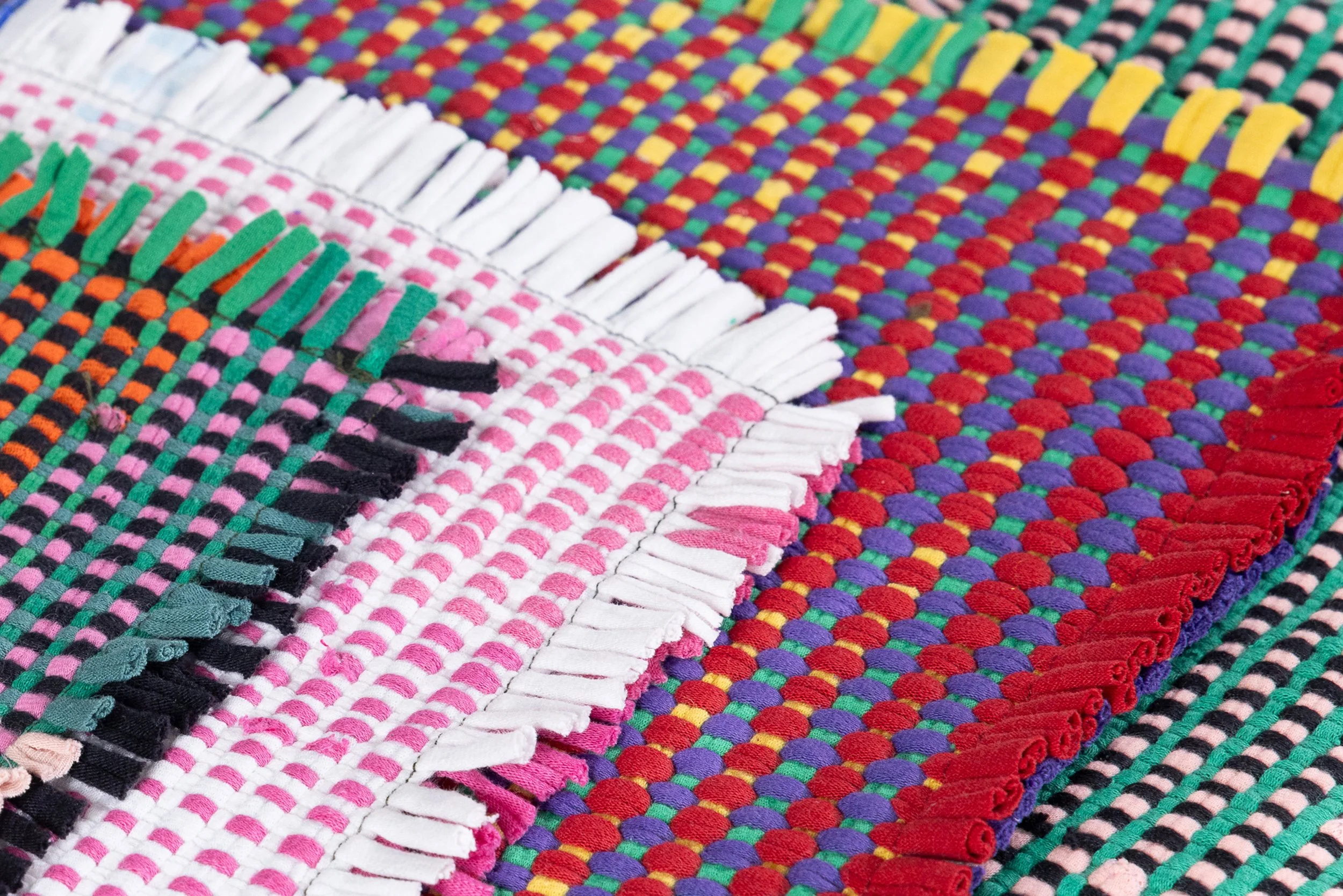
Image: Woven Tarn by The OR Foundation, 2026
The Or Foundation is a US- and Ghana-based charity tackling fashion waste at every level from systems change, education and wellbeing to product development. Kennie McCarthy is their assistant manager of product development. “There's guilt when you produce waste, which is a concept I personally do not agree with,” she says, which is perhaps surprising, given that she is based in Accra, Ghana, home to Kantamanto Market. It’s the world’s biggest second-hand clothing market and where much of the West’s textiles waste ends up. “Of course I’m working towards a circular economy, but you can only make something so circular,” she explains. “Waste is only waste when you decide that there's no use for something. If we could just focus on the beauty of things… my purpose is to make things beautiful.” That beauty is evident in the bold colour pallets of the two products The Or Foundation launched at Materials Matters: Acoustic panelling called Cassaboard made from a recycled biocomposite comprising post-consumer clothing and cassava-based binders and ‘Tarnty’—a circular yarn for knitting, crochet and weaving, each ball of which is made from a single unsold t-shirt. No dye is added to either product; their colours are dictated by textiles they are made from. “You need constraints to make something beautiful,” she says. “And if the material that you're using does that for you, you can be more creative.”
Of course, making waste beautiful will not solve the overproduction of a linear economy driven by capitalism. But when you know where materials come from, see the marks of their previous lives and get excited about what they might become, it becomes harder to treat them as disposable. Real change starts by approaching this wicked problem not with guilt and duty but with curiosity and joy. The future of waste is bright.
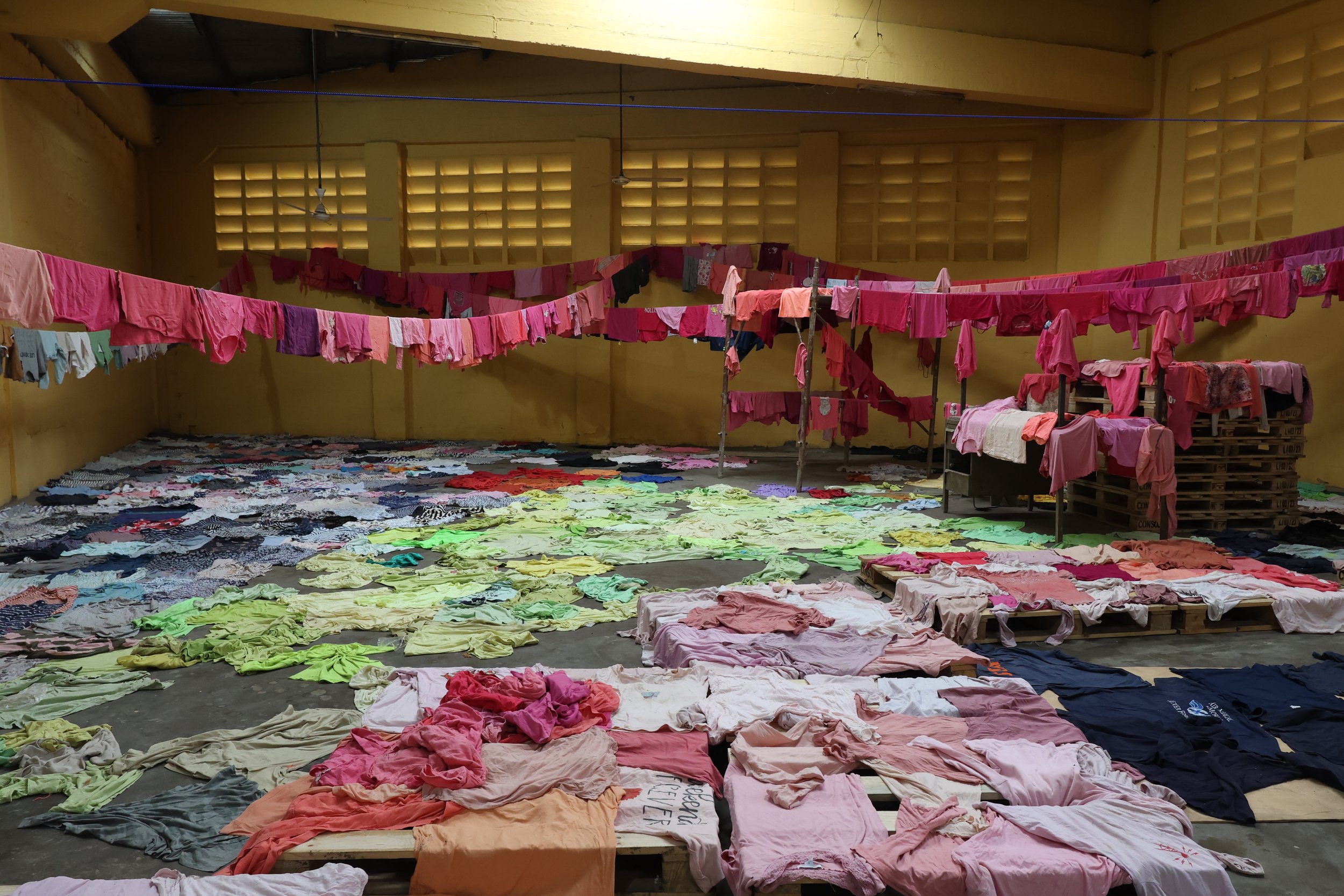
Image: The Or Foundation Material Lab 2023
About Crafts Council Membership:
Crafts Council Membership is the essential offering for craft makers and enthusiasts looking for connection, inspiration, and guidance. Our members form part of a dynamic community of craft champions, connected by a shared belief in the power of making.
Whether you’re developing a professional practice or exploring a personal passion, Crafts Council membership connects you to digital editorial, year-round events, the Crafts Council Directory, inspiring business resources, exclusive offers, opportunities, on-demand recordings, the Crafts magazine archive, and much more. To discover the Membership, visit the Crafts Council website: https://www.craftscouncil.org.uk/become-a-member/
All copy is reproduced here as it was supplied by Katie Treggiden to the client or publication.
Katie Treggiden is an author, journalist, speaker & strategist helping the design sector understand, navigate and communicate the transition to a regenerative future.