Stop, Collaborate and Listen

Photo credit: Andrea Piacquadio
Why giving away your competitive edge might be the most powerful thing you do, for people, planet AND profit.
“Well, I’ll be checking their T&Cs,” he said*, clearly cynical that someone had been able to equal what he saw as a unique competitive advantage.
Every company is seeking a competitive edge; something that will make clients and customers choose their product or service over somebody else’s—that’s just how business works. And when you find one, of course you want to protect it. The secret to your exemplary customer service? The widget that makes your product function better? The innovation that enables higher margins or lower prices. By all means, take those to your grave.
But the competitive advantage we were talking about? It was a lifetime warranty. This business owner had been telling me with great pride that his company was the only one in his sector to care about the environment enough to extend the lifespan of his products by offering repairs for life. I knew for a fact that they weren’t the only one, because I’d recently worked with another brand offering the same thing. When I told him this, excitedly, he seemed genuinely put out that one of his peers cared about the environment too; that, by working together, they might even be able to change the whole sector. He seemed… angry.
Compare this with an email I recently received from Tony’s Chocolonely:
“HUGE congrats to HALBA for taking home #1!”, it read. “We’re excited to see another brand raising the bar ’cause it’s only together that we’ll end exploitation in cocoa.”
They were praising another brand—a competitor—for beating them to the top spot in this year’s ‘chocolate scorecard,’ which ranks chocolate producers’ supply chains, based on living income, gender equality, child and forced labour, pesticides and agroforestry and climate. The ‘lonely’ in Tony’s Chocolonely is a nod to the fact that founder, Dutch journalist Teun van de Keuken, felt alone in his mission to bring about ethical supply chain changes. And yet, when he is proven wrong and not only joined, but beaten, by another chocolate brand, his marketing team celebrates that.
In Simon Sinek's book The Infinite Game, he contests the sport and war metaphors that inform so many business practices, arguing that business is not a finite game with an endpoint, a winner and a loser. He offers the term ‘worthy rival,’ in place of ‘competitor’—another player in the ‘infinite game’ whose excellence inspires you to improve your own product, culture, and leadership. For a long time, I have embraced this term, describing my clients’ competitors as ‘worthy rivals’ in strategic presentations and reports.
However, for purpose-driven businesses, even this doesn’t go far enough. We can consider ourselves worthy rivals on customer service, we can compete on functionality, we can even go head-to-head on price (although I rarely recommend it), but when it comes to purpose, we must actively collaborate.
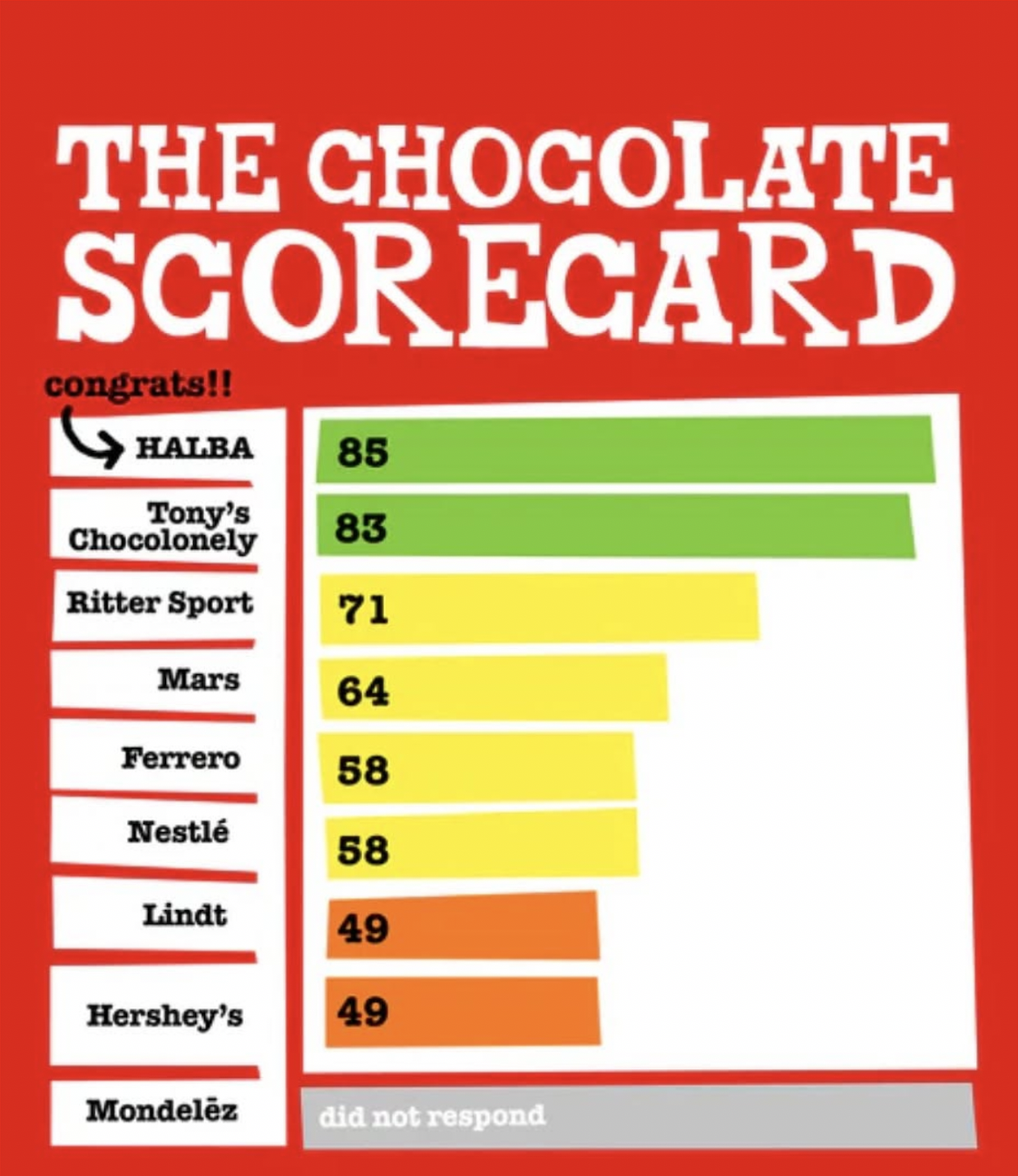



Photo credits from L-R: Tony’s Chocolonely, Parisa Pourtaherian, Spark & Bell and Ron Lack
Why? Because none of us can address the climate crisis single-handedly. (If we could, you’d like to think someone would have taken care of it already!) If we genuinely want to bring about change, we need to work together. That doesn’t mean you can’t shout your environmental achievements from the rooftops to attract clients with aligned values. But it does mean you must share your learnings publicly, work with your competitors worthy rivals collaborators to bring about systemic change and then celebrate them when they join, or even beat, you.
And not just for the greater good, because herein lies the rub. The oh-so subtle distinction in your comms between ‘we’re the only people doing this… aren’t we great?’ and ‘we’re the only people doing this… here’s how to join us,’ belies your true values to your audience.
Are you offering a lifetime guarantee because you care about the planet, or because you think it will help you sell more products? Of course, it’s rarely as binary as that. Most people care about the planet and want to sell more products. But you can do both, and so can your collaborators. This is not a zero-sum game.
More than 80% of UK B2B design specifiers, such as architects and interior designers, regularly integrate sustainability into their project specifications,[1] and, according to YouGov, between 65% and 83% of UK consumers consider sustainability when making purchases[2]. We all know that intent doesn’t always translate into action, but there are more than enough responsible clients and customers to go around—and squabbling over them is only going to push them away. Because, in this era of AI, clickbait and online scams, these clients are becoming hyper-vigilant about detecting the genuine intent behind marketing messages. They’re not listening to what you say, but discerning what you really mean.
So, if you’re going to say that you care, you had better mean it, to your core. That’s why my Credible Comms Framework starts with internal clarity—with making sure you’re clear on your values, your North Star and your ‘why’. You may never share those things publicly, but you’d better assume your clients are savvy enough to read between the lines.
Katie Treggiden is an author, journalist, speaker & strategist helping the design sector understand, navigate and communicate the transition to a regenerative future.
*I am not naming and shaming either the person or the brand, because he is a good man and they are a good brand, doing good things. This just struck me as a surprising, and slightly tone-deaf, response, and an interesting starting point for a conversation about nuanced comms.
References
[1] https://news.specwall.com/news/how-important-is-sustainability-to-specifiers-and-designers
[2] https://yougov.com/en-gb/articles/49572-british-attitudes-towards-sustainability-on-world-environment-day-2024