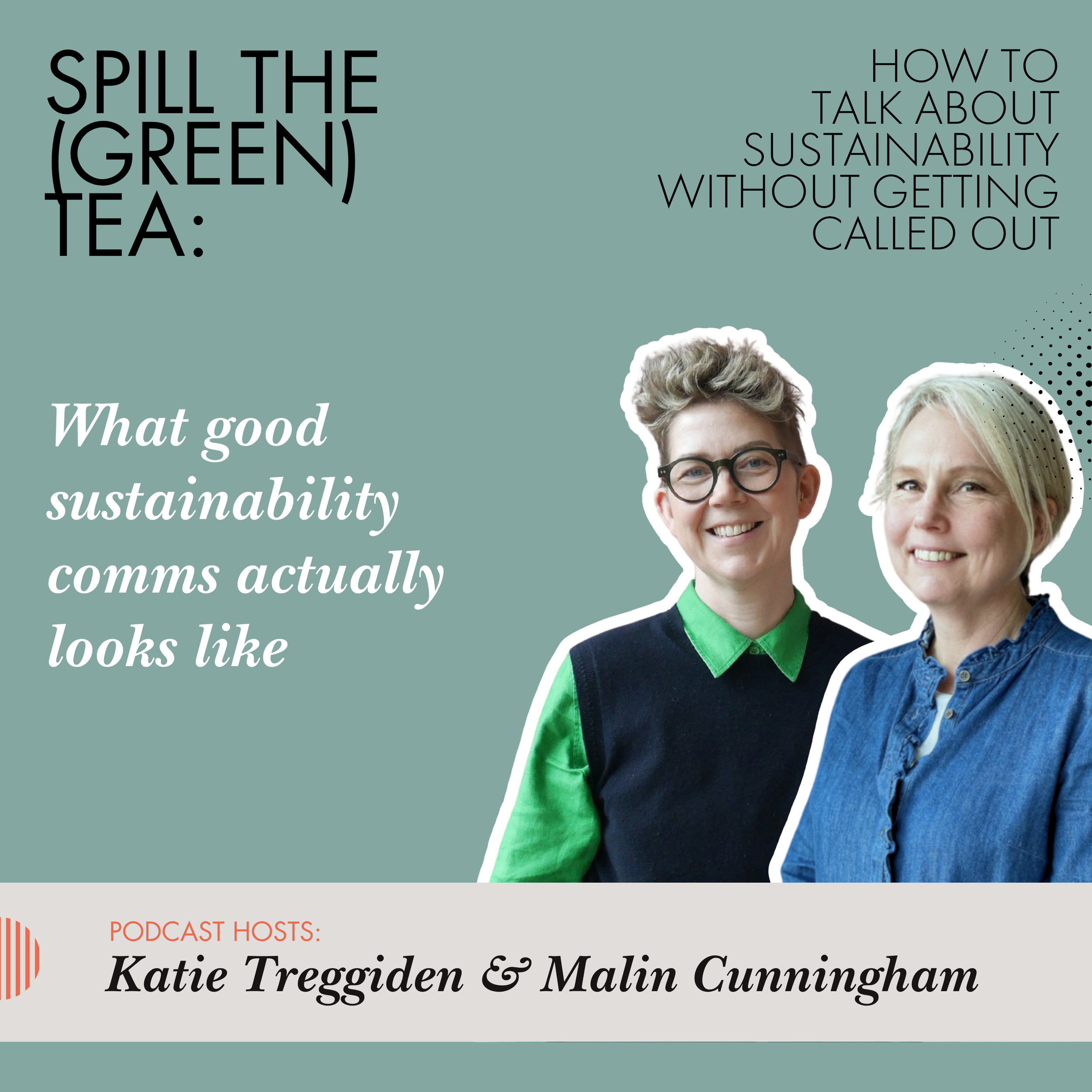
Spill The (Green) Tea - What good sustainability comms actually looks like
This is an auto-generated transcript that has not been edited or proofread and therefore may contain errors.
Malin Cunningham
Welcome to Spill the Green Tea, the podcast where we dive into perhaps the most controversial part of sustainability, how to talk about it.
Katie Treggiden
That's right, we're exploring how to talk about your eco-efforts without getting called out. Join us for straight-talking, behind-the-scenes insights and practical takeaways that will help you gather the courage to shine your light in these volatile, uncertain, complex and ambiguous times.
Malin Cunningham
It's a serious topic and we don't shy away from that, but we will bring you uplifting, positive and pragmatic conversations with brilliant guests and in-depth discussions between the two of us, all to give you the confidence to talk about your imperfect efforts towards genuine sustainability.
Katie Treggiden
Because it's not just showing off, sharing your progress helps you connect with clients and customers and inspire others to be more open about where they are on their journey. We need your stories now more than ever.
Welcome to this episode of Spill the Green Tea, in which Malin and I attempt to share some hope in amongst the heatwave. It has been incredibly hot right across Europe recently and clearly that's because of climate change and I think if it's something that's on your radar, your feeds are full of it. So we just wanted to share some good news stories of people who are doing sustainability well and people who are doing sustainability comms well.
So enjoy, I hope that it provides a reprieve from the heat and some hope and some inspiration. We are sitting here in at the end of June, we've just experienced the second heatwave of the year so far, which just feels absolutely crazy. Days into summer, summer officially begins on the 21st of June, so and we're breaking records.
And I mean I think it's been interesting this time because it feels there's been quite a lot of conversations around climate change this time. I don't know whether it's just me seeing that, because that's obviously the world we're in, but there's been quite a lot of connection to it. But we wanted this episode to be about some positive stuff, didn't we?
So there, you know, because of the heatwave, a lot of people are worrying about the the heat and the changing climate etc. But we wanted to give everybody some hope and demonstrate there's some great stuff happening everywhere at the same time as that's obviously going on. Yeah, absolutely.
And I think I've seen kind of on the radio, I heard a whole programme about the record-breaking temperatures that didn't mention climate change, but my Instagram feed and my LinkedIn feed are absolutely full. So I think if you're engaged in this topic, if you're one of our listeners, this is probably feeling very heavy at the moment and it's not to negate the seriousness of that, but Malin and I both believe that hope leads to action and action leads to hope. So we wanted to share some good news stories of the people who are doing something about it.
Yes, absolutely. And the very first one, so doing some reading around as you do all the time, we've got some great news from the London Stock Exchange Group, which is not something that I read all the time, but you know, this popped up because they are reporting that the green economy is now worth 10 trillion dollars. I mean, how amazing is that?
I mean, it's so big that it's hard to wrap your head around, isn't it? In fact, it has overtaken healthcare in terms of market value globally. So that is really great news to celebrate.
In fact, revenues in 2025, because this is what they were reporting on, was up 5.3 percent. So that's really, really interesting. And it also said that if the green economy was classed as a sector on its own, because currently it's not, it's kind of bits in different types of sectors, it would be the third largest globally, only after tech and industrial goods and services, that would be the only two ahead.
So I think that's something, it is incredible, isn't it? And I just think that it's interesting because it feels like that is definitely lost in the general conversations about these things, because maybe because of the fact that it's political or whatever it is, but it feels that that should really be, you know, front page news, I think. Yeah, because I think you tend to hear two things that are counter to that.
One is that sustainability is expensive and we'll only do it in good times. We can't really afford it. It's seen as a cost rather than something that drives profit or revenue.
And the other is that it's niche and not very many people are doing it. But those figures contradict both of those assumptions. Clearly, there's plenty of revenue in it if it's such a big market.
And it's not niche in the slightest if it would be the third biggest sector. No, exactly. And I feel like, you know, obviously, we talk a lot about the fact that if anything, it's been put on the, you know, it's all the green hush thing.
People are not really talking about it. But maybe that's what we're discovering here, that it's all happening anyway. It's just the people are not giving it that that label because they're worried about what that might say about the business or whatever it might be.
It's not the story that people want to tell, basically. Yeah. And we have heard about what would have once been called sort of sustainability initiatives being rebranded as resilience or, you know, kind of these slightly different words.
So perhaps that's part of what's going on, that these innovations are still happening. They're just being labelled differently in the current political climate, which is heartening. Thanks for that story, Malin.
Malin and I have both been out and about. It is sort of design fair, design conference, built environment conference season. And so before we set out to the various shows and conferences we've been to, we sort of made a pact with each other that we'd keep our eyes out for examples of good things that are happening.
And I know you've been to FutureBuild, Malin. Tell us a little bit, firstly, about what FutureBuild is for anyone who's not familiar, and then about the Madaster match, which you spotted there, which sounds really interesting. Yes.
So FutureBuild is an annual conference all about sustainability in the built environment. And obviously, we do a lot of work in that sector. It's an interesting one because it's both a conference and a showcase of products.
They have, you know, sort of innovation competitions and all that kind of stuff. So it's both a conversation around what's happening in the sector and, you know, showcasing what people are doing. And interestingly, it's a cross-disciplinary one.
So it's everybody from engineers to specifiers to product manufacturers that kind of come together under one roof to look at where we're at, basically. We need more of that, I think, don't we? That cross-disciplinary connection.
Yeah, no, it's great. And I thought, so obviously, I'm going to tell you about the Madaster match in one minute. But I thought the really interesting thing was how positive the chat was.
Everybody was very upbeat about what was happening. And there was a real buzz around things shifting somehow, which I thought was quite interesting, just in general. And then there was a competition around innovation in general.
And the company that won the competition, I call Madaster match, really interesting concept. And they are like vintage, but for the construction industry. So essentially matchmaking organisations that are making products with, you know, whoever is running either specifiers or the, you know, construction companies or the project managers for various products to make sure that products can stay in circulation for much longer.
So this is second-hand built environment products. Yes. That's fantastic.
That's so interesting because I heard years and years ago, I heard about a concept along these lines, and I was never able to find it. Somebody told me anecdotally, and when I went to fact check it to put it in the wasted book, I couldn't find it. So the fact that it actually exists and somebody's made it real is brilliant.
Yeah, it's incredible, isn't it? And so they're doing, I think they're doing the first trials in Germany and the Netherlands at the moment, but it's definitely coming to the UK, which is why obviously they were at FutureBuild. And I think they're making it very clear that they're not actually taking a cut or anything.
They're just basically trying to match businesses together. So, you know, they've got other platforms basically, which is where, you know, they can offer a service, but this is kind of a by-product of that, which is just very, very exciting. And I know that it's something that specifiers talk a lot about, isn't it?
That it's, you know, it's really hard to find products and have the right information available because, you know, once it's been used to make sure that, you know, it is usable. Yeah. The other thing that specifiers struggle with is that it's available when they need it.
So, you know, it's all very well it turning up on site three months early or three months late, but it needs to be available on the day that they need it to keep the project running on time. So a platform at scale that can let you know where these products are sounds really valuable. And given that Vinted is now the number one fashion retailer in France, and I think it's the third biggest fashion retailer in the UK, that has scaled way beyond I think anybody's expectations.
So it sounds like something like this could be really powerful in the built environment as well. Yeah, definitely. And I think a lot of this is about getting used to a different way of working, isn't it?
You know, you have to try it. Obviously, there's going to be challenges along the way that there always are, aren't there? But, you know, you have to start somewhere, don't you?
Yeah.
But it's interesting to see how Vinted has changed people's buying behaviour. I know a lot of women, myself included, used to hang on to clothes that were too small or too big, just in case our body shape changed again, because let's be honest, our body shapes are changing all the time. Whereas now certainly I have much more of a feeling of kind of all the women in Britain just have one big shared wardrobe, and I'm very happy to let things go knowing that I will welcome something in and then if I need to let that go again.
And I think it's a completely different approach. It feels more like a shared sharing economy than the way I used to buy clothes, which was, you know, I want to hang on to this thing. I used to buy very kind of investment pieces very carefully and hold on to them for a very long time, which is what we're all told to do environmentally, but it doesn't really work if your body's constantly changing shape, you know?
And I think, again, with, you know, specifiers are very used to being able to have exactly what they want to the exact right proportions and, you know, specs, specifications, hence their title, the moment, you know, in the exact moment in the project plan that they need it. And hopefully this platform will be able to deliver a lot of that, but it will be interesting to see the behaviour changes, either that are necessary or that come about as a result of this being available. Yeah, absolutely.
No, and it was, it was just very refreshing to hear him talk about it and being really excited about it. And, you know, you could see sort of light bulbs going off in people's heads, you know, thinking about what could, what could happen as a result. So yeah, it definitely fulfils a need.
I've worked with a brilliant young designer called Sarah Howard, and one of the many things she does, she's one of these kind of creative entrepreneurs with multiple hats, is that she rescues clay from demolition sites and puts it in the hands of artists who then often make things for whatever is being built. But one of the struggles she has is access to the sites. So she could often only get in on a sort of two hour window and that sort of thing.
So I think having these platforms will really make that much more accessible. Now, one of your clients is also doing something really exciting. So tell us about Johnson Tiles' latest initiative.
Yeah, speaking of clay, that's a good look. Yeah, they have teamed up with a company called Dekiln, and they are creating, they've found a way of creating non-fired tiles. And why that's significant is because it's the firing of the tiles, as in burning them, that is all the energy basically that turns it into, you know, a sort of high emissions type product.
It's very durable, obviously, as a tile. However, this is a way of getting around it. So they have, they're using a fire material and they're using recycled content as well.
So it's not just that it's lower emissions, but they're also using recycled content. And that is gypsum plaster. So at the moment, I think, you know, I don't know all the details of it because it's a very new product, but they're basically looking at ways of scaling it to get it into markets.
That's why they teamed up with Johnson Tiles, or rather they're teamed up together. So they've got the technology, as in Dekiln, and JT are looking to how we can get this to market and get more people buying non-fired tiles. I just think it's crazy.
Yeah, and it's for so long, the energy requirement for the kiln has been seen as the one thing you can't get around in ceramics. And I know people who make sort of beautiful paper mache vases as a way to get around that. But of course, they're watertight, they don't have the same performance.
But from what I understand, these are kind of high performance commercial tiles. So solving a problem that's existed in the ceramics industry for a long, long time from a sustainability point of view. Yeah, definitely.
I mean, I think they can only be used on walls. I don't know. They haven't got all that kind of spec sorted yet, but it's definitely a wall tile.
And they're working through the technology for the rest as these things, it's always a process they have to go through, isn't it? But yeah, no, it's very, very, very exciting in lots of different ways. And exciting to see companies as big as Johnson Tiles, kind of really taking this stuff seriously and investing in new technology, taking a risk, partnering with a younger company, I'm assuming.
That's really reassuring as well, isn't it? Because we often think these big companies just don't care. So it's lovely to see them kind of investing in something like this.
No, absolutely. I mean, it's come out of Manchester University, basically. So it's one of those, it's basically a tech startup or a green tech startup born out of the pandemic.
You know, we had a bit more time to play around with materials. And, you know, I think there's probably quite a lot of stuff that came out of that, that we're hearing about. There's something interesting, isn't there, perhaps it was that those students couldn't access the kilns because of lockdown and, you know, necessity is the mother of invention.
We often have interesting evolutions and innovations come out of constraints. Yeah, definitely. So Katie, I know that you've been out and about as well.
And obviously, this is all about comms, our podcast. So have you got any great stories from your travels? Yeah, so I've been to Clark Mall Design Week, which was towards the end of May.
And I've been to three days of design in Copenhagen, which is early June. And I was specifically keeping my eyes open for good examples of comms. The first one came from a brilliant furniture company called Dead Good, who are based on Old Street in London.
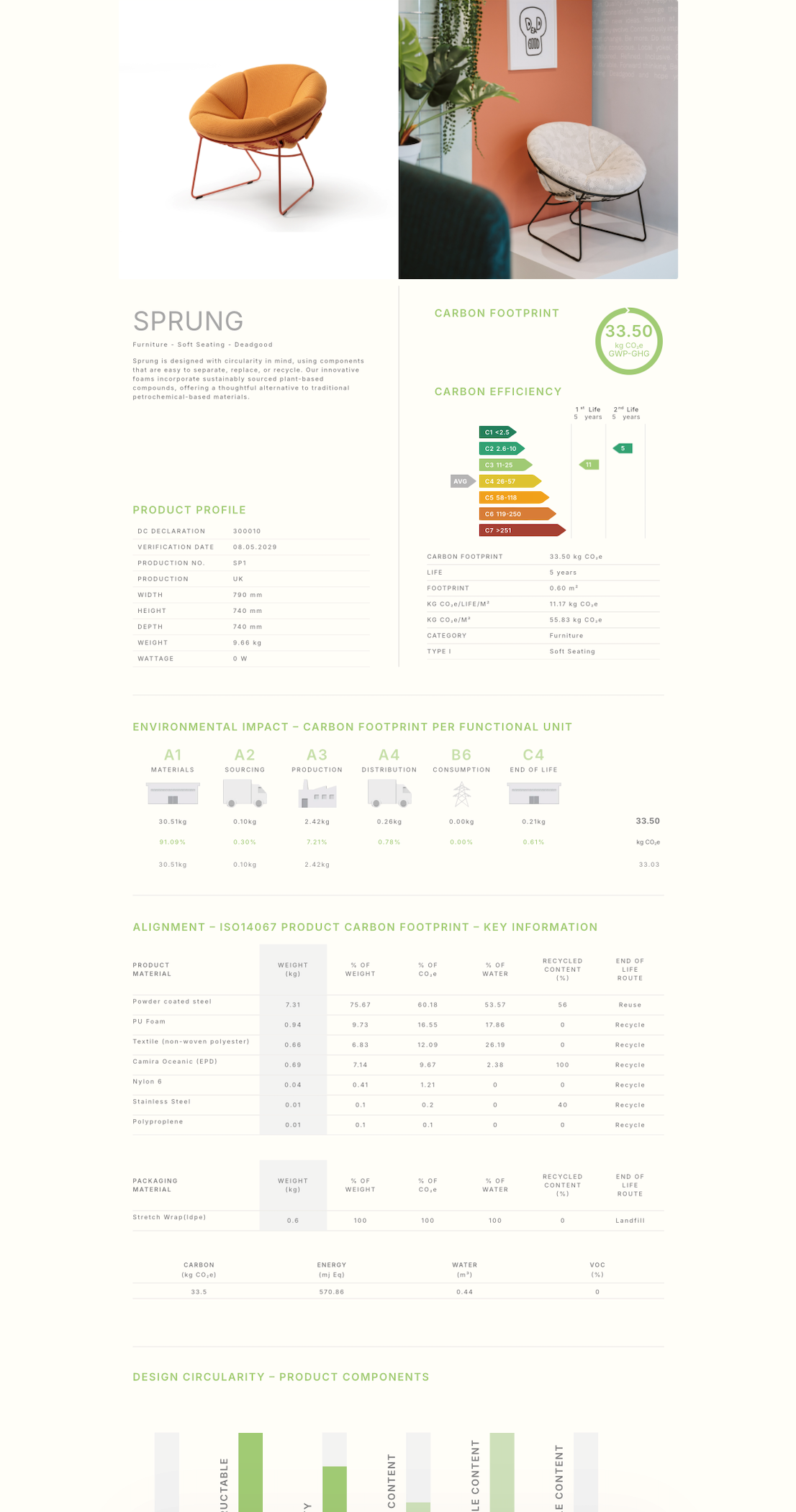
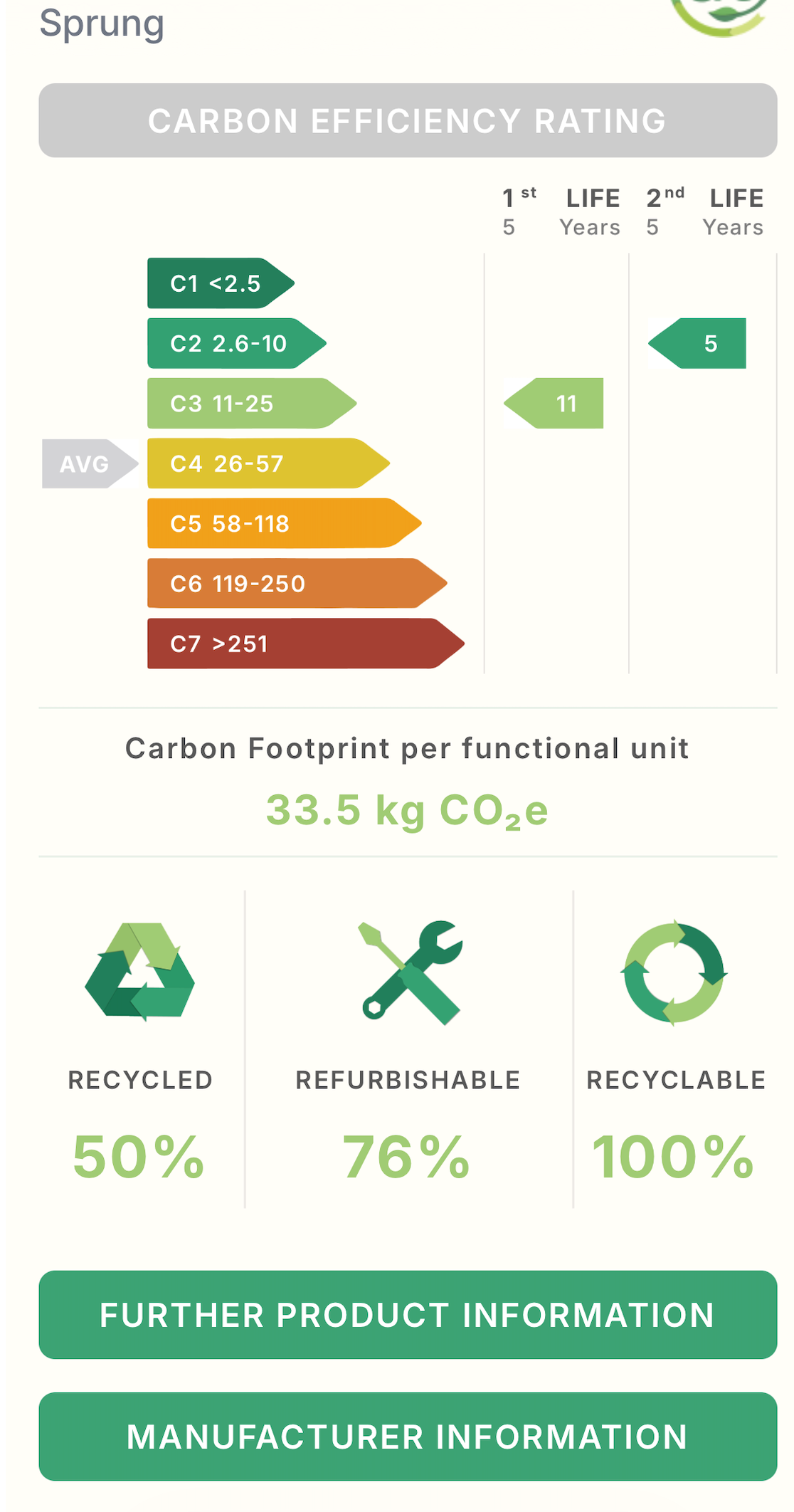
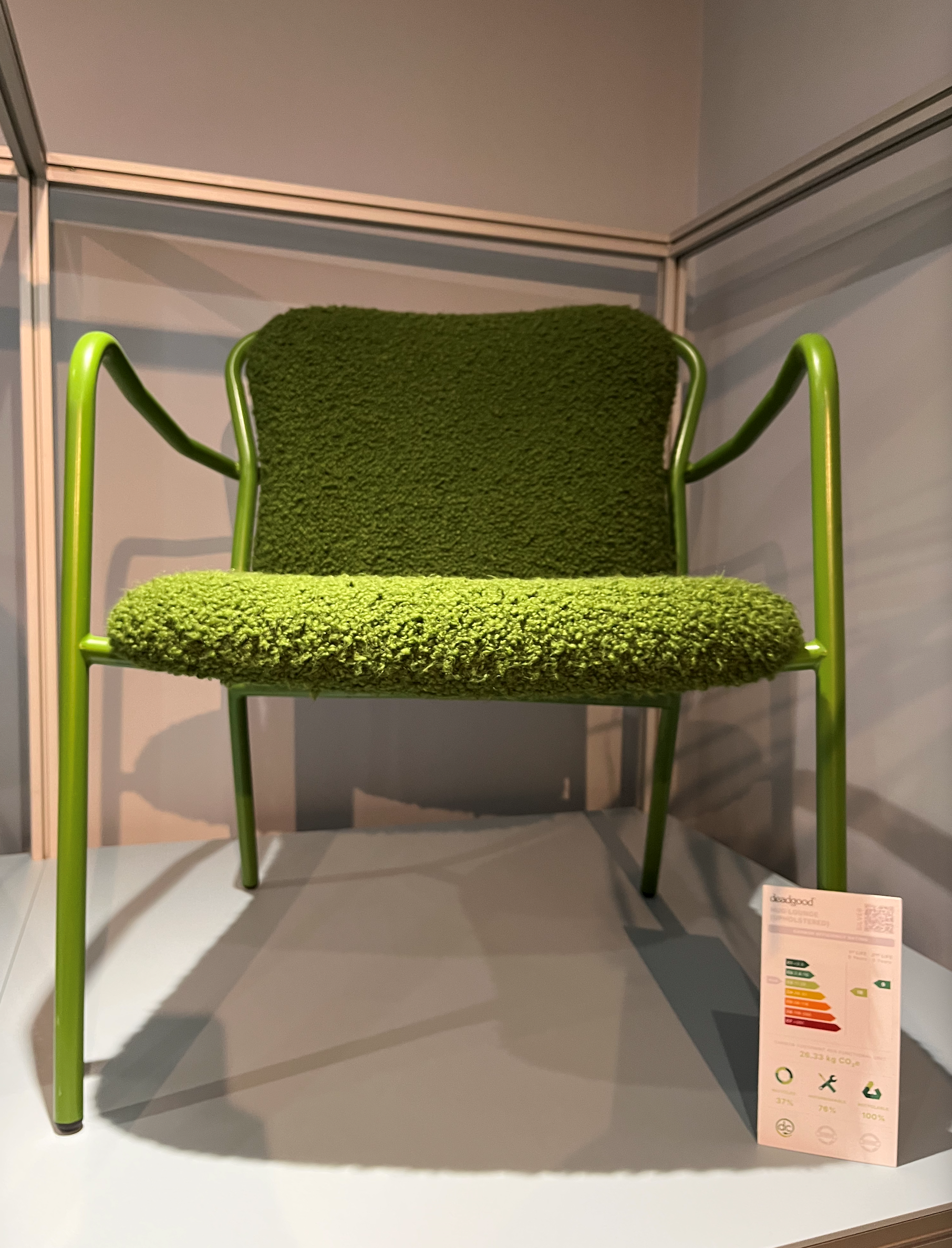
And they've launched something called furniture passports. And what I thought was interesting about these was they demonstrate the message layering that I talk about in my credible comms framework absolutely beautifully. So we will pop some photos in the show notes.
So you can see this for yourself. But the first thing I spotted was against each of the chairs in the showroom, there was a little card leaning up against the leg of the chair that had a sort of traffic light system, it looks very similar to the kind of energy rating you might get on a washing machine. So visually, I immediately understood it.
I've seen this sort of visual language before. And it turns out that it is something called a furniture passport, which is the precursor to the digital product passports that will have to happen according to the EU's mandates by 2028. And Dead Good have partnered with a company called Design Conformity.
So what happens is on this little card in the showroom, or eventually there'll be a QR code physically on the bottom of the product itself. So underneath the chair seat, you can get this kind of top level information. So each passport covers carbon dioxide equivalent recycled content, designed for disassembly and repairability, which sort of ties into Dead Good's Relove programme for second life products.
But part of the reason they chose to work with Design Conformity for this specifically, because there are a couple of people offering these, the kind of back end for this, is this very clear messaging. So you get this traffic light system up front, which tells you kind of where you sit, where your carbon efficiency sits within the first five years of the product, which they're calling the first life, and then five years on, which they're calling the second life. It tells you what the recyclable content is, how refurbishable the product is, how recyclable it is.
So they're making that important distinction between recycled and recyclable, which people don't always. And then you can click through for either further product information or further manufacturer information, which I thought was really interesting. And then you get down to an incredibly granular level of detail.
So they're giving you all of that kind of substantiation, but only if you need it. So I thought it was a really clever way of just showing the different levels of information that different people need whilst being in kind of in line with the Green Claims Code at every level. So it was a really nice example of that message layering that I talk about in the Credible Comms Framework.
Yes, and I'm guessing, I mean, I know about Dead Good already, but knowing their products, it's very beautiful products, isn't it? Yes. So it might even be that you're not actually, as a buyer, that might not be one of the key criteria.
You might just be buying it for the beauty of the chair, but you're being reassured by the fact that you've got this kind of ladder of insight. Yeah. So they had, I love how playful they are as a brand.
They had a chair in the window that looked like it had been made from giant lollipop sticks. So, you know, this is not a sort of very serious, worthy brand. They're very playful.
They're very joyful. They use bright colours. But they're also understanding, A, that their audience is asking for this and B, that they're changing regulations is coming.
And rather than sort of bombarding people with information, which often happens, you get this sort of big impact report or making vague claims like 100% sustainable. It's just a very clear example of these are the things you need to know. These are the headlines.
I talk about the headline, the subhead, the body copy and the substantiation. And that's absolutely what they've done. It was a textbook example of message layering done really well.
Excellent. That's very exciting. And then you also went to three days of design, I believe.
I did. Yeah. In Copenhagen, which is such a lovely city.
I spent more time on a bicycle in the rain than I would have otherwise done. One of the things I've been thinking about recently is how much clients and customers are trying to discern the difference between what you say and what you mean and how subtle that can be. So I did.
I've just started a new opinion column on my website. And I spoke recently about the difference between brands who will say, we're the only people doing this for the environment. Aren't we great?
And seeing it as a competitive advantage, they will protect versus we're the only people doing this. This is how to join us. Come and do this too.
And I shared an example of a company I didn't name because I'm not into naming and shaming, but someone who actually seemed a bit put out when they found out that someone else had joined them in this important environmental action. And then Tony's Chocolate Only, who are actively celebrating the chocolate company that beat them to the number one spot in the chocolate impact reports. So just thinking about how consumers and clients and specifiers are getting increasingly sophisticated at discerning the difference between what you say and what you mean.
And a lovely example. It was very hot in Copenhagen. And so a lot of the brands were handing out water.
I was on a press trip. So 20 or so journalists would turn up in a showroom all at once. The people working there were expecting us.
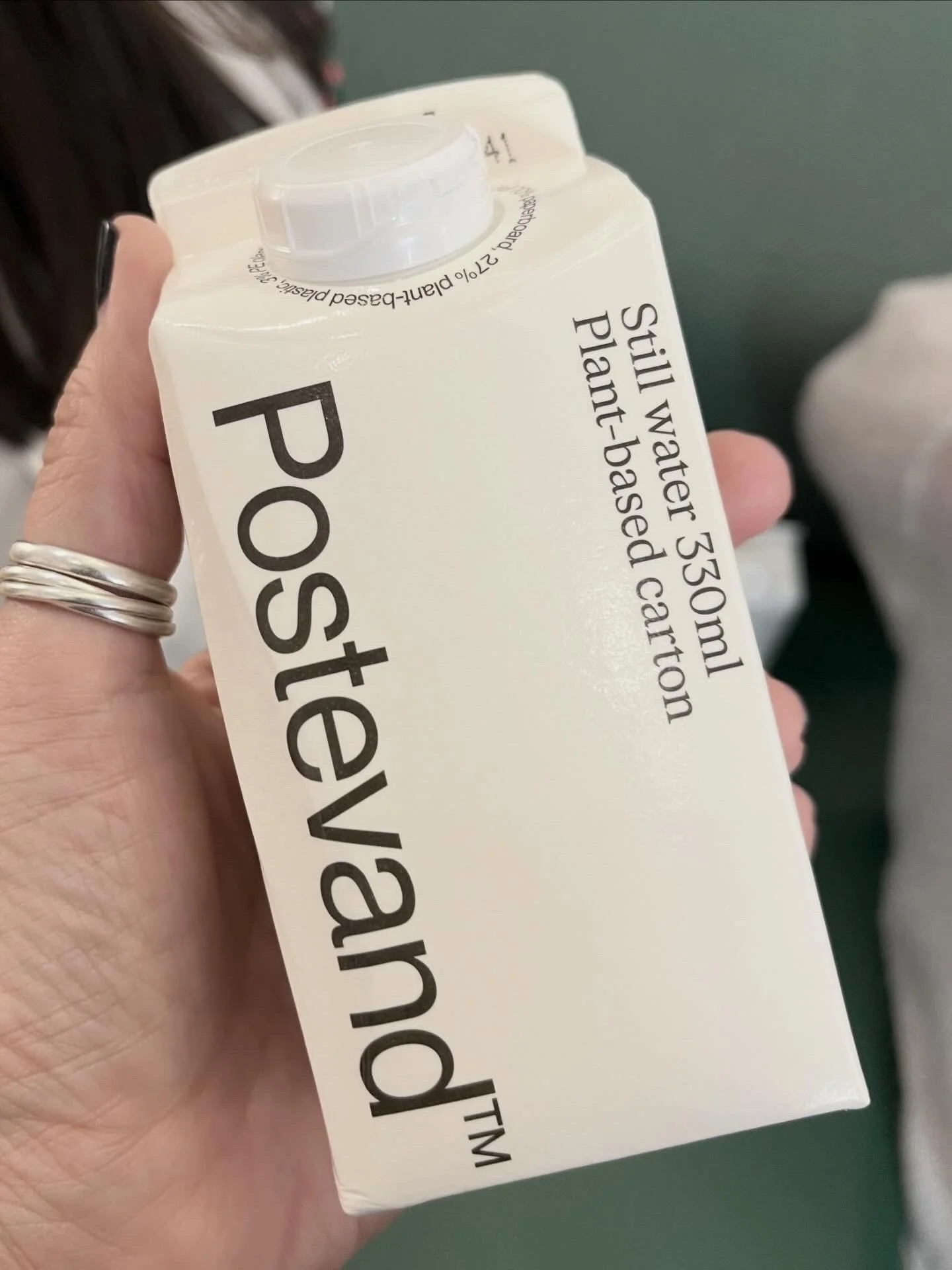
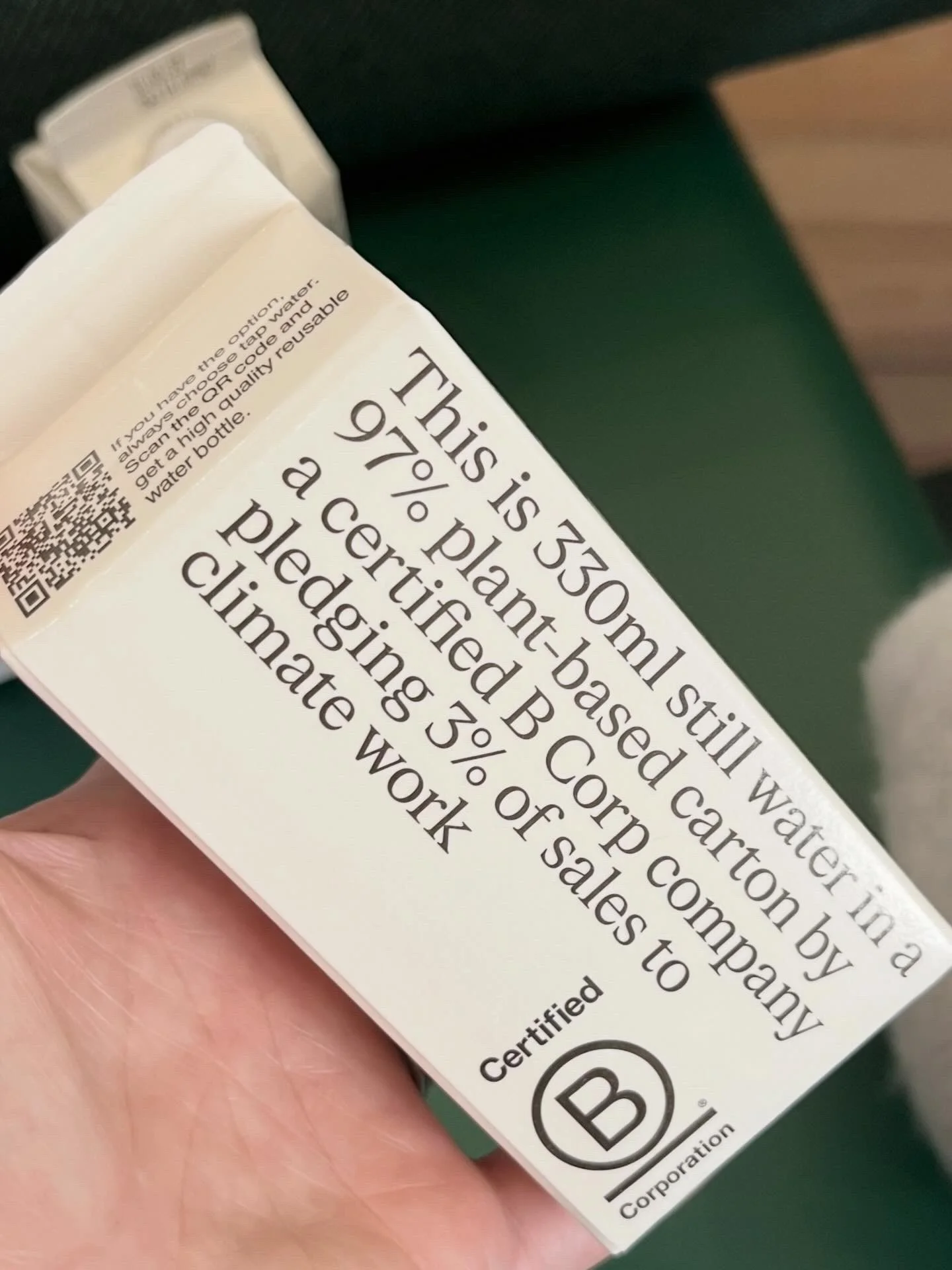
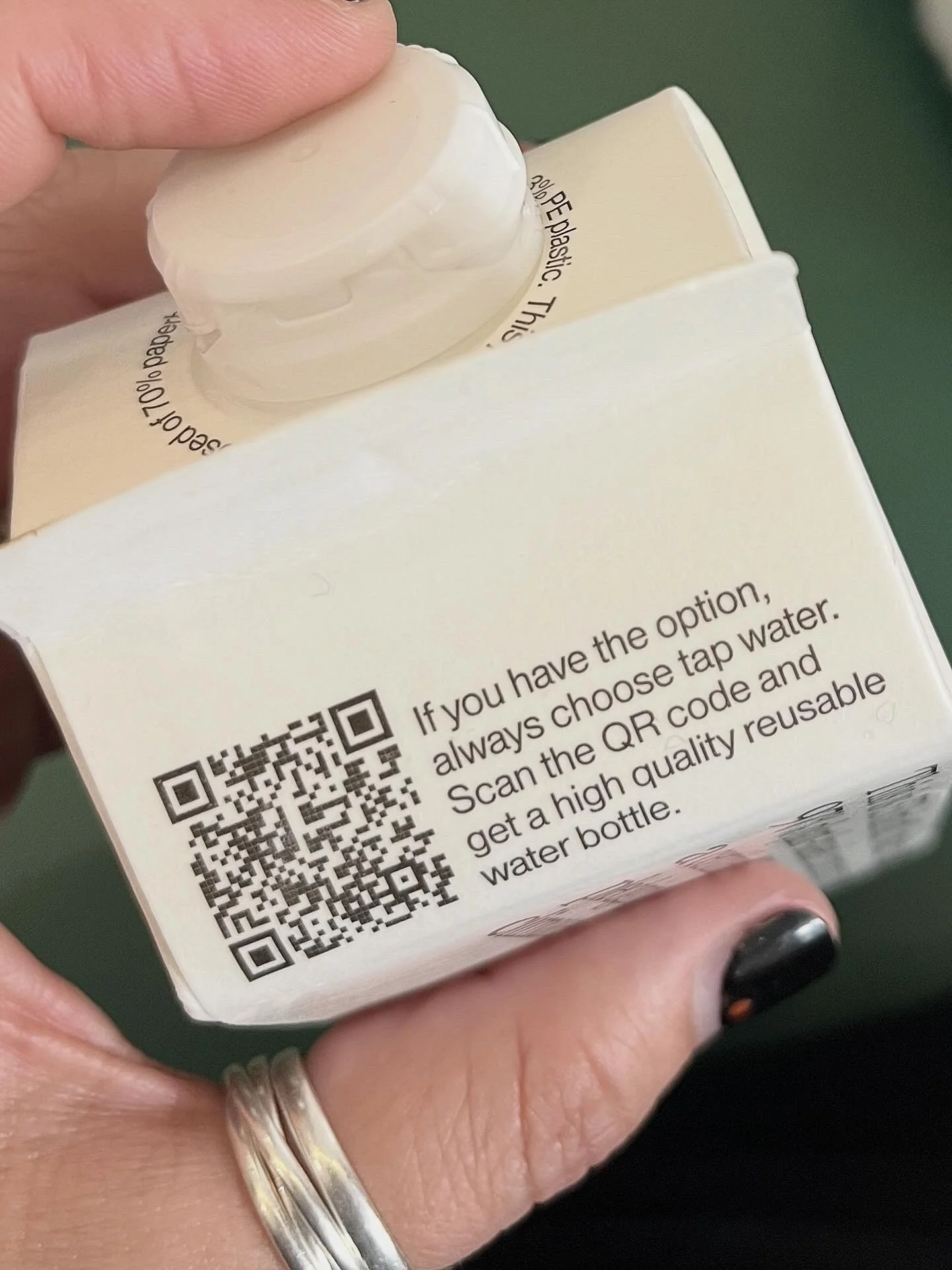
So often they would have laid on some coffee or some sandwiches, and often we would get handed a plastic bottle of water with a brand who's talking to us about sustainability. One brand stood up, stood out because they were handing out, and Malin has helped me with the pronunciation of this, because it's a Danish brand, Postvatn water, which is water that comes in plant-based cartons. And they're a B Corp.
They pledge 3% of their sales to climate work. And the first thing you will see in any of their communications and on their bottles is, if you have the option, always choose tap water. Scan the QR code and get a high quality reusable water bottle.
So the first thing they're doing is saying, don't buy our product, go and do something more sustainable, which I thought was such a green flag for Postvatn. But then also for the showroom who thought this through and the amount of time I spent talking to clients about not serving water in plastic bottles or not serving carbon-intensive food like cured meats at events where I'm working with them and we're talking about sustainability, I think it's one of those little tiny red flags. And often the people organising your catering are not the same people booking your speaker, it's so easy to do.
But if you genuinely care about this stuff, it should run like a red thread through your whole organisation. So where I've done carbon literacy training with an organisation, the next time I turn up, I do expect that to be predominantly plant-based food. Well, we've talked about that in the training.
And I just thought it was such a little example, but such a crucial example. And again, Malin and I will say this again and again, this is not about being perfect. It's just one of those little tells about whether this stuff actually runs through your values or whether it's performative.
And I thought it was a great example, both on behalf of the brand and on behalf of the water company, that their values really did run through kind of every level of their brand communications, at every touch point, at every part of the experience you are having of that brand. Yeah, that's incredible. And actually, so my Danish isn't absolutely amazing, but I could help you with the pronunciation.
But it actually means tap water as well, doesn't it? Yes. So I'm guessing, I don't know.
But anyway, so that message is louder and clearer than ever. Yeah, it's tap water, a plant-based bottle.
Yeah.
And it's kind of a paper carton. Yeah, exactly. And it's telling you to drink tap water if you can.
So that's really, it's a bit like the Patagonia don't buy this jacket, isn't it? I mean, not, you know, it's a similar kind of playful in a really interesting way. That makes people think.
Yeah. And I think, you know, it is, there will be situations where we can't access tap water and that's what bottled water is for. And I think sort of understanding that and understanding that you're not going to lose sales with that.
I mean, Patagonia's made more sales as a result, ironically. And that sounds therefore wrong. But the point is, there are so many people selling this stuff.
What you're going to do is win share rather than increasing consumption overall. And I think that's a nuance that often gets missed. Yes, absolutely.
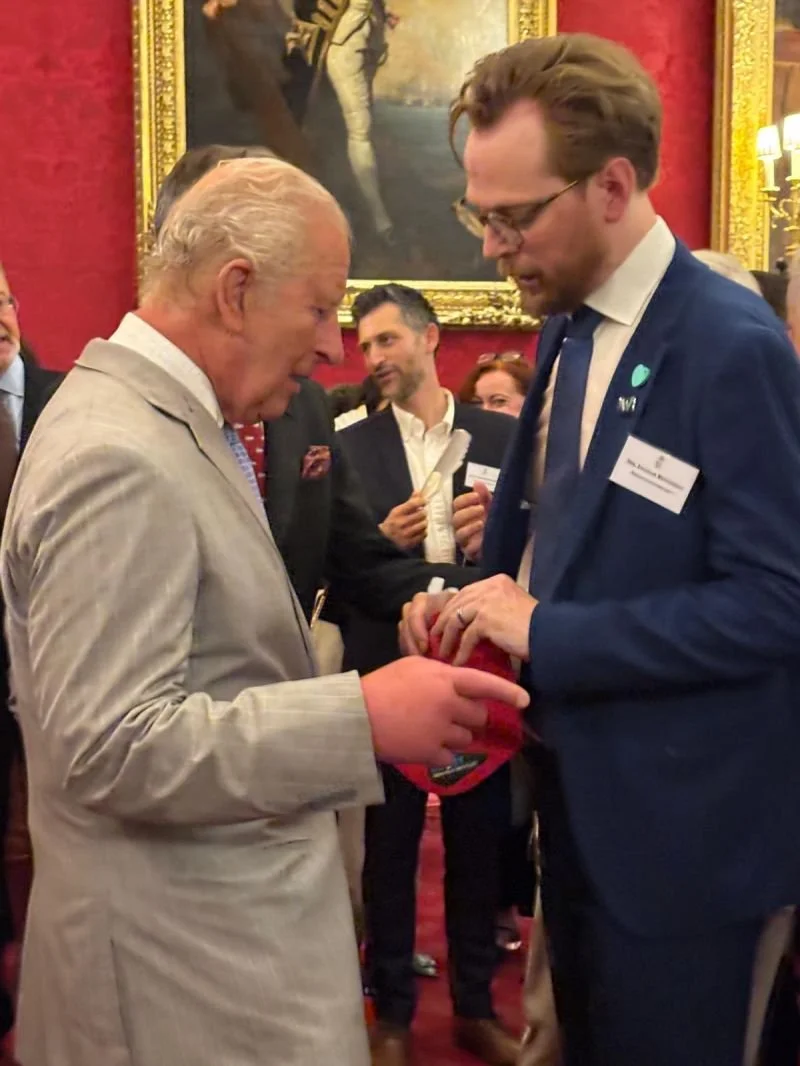
And then speaking of clever comms, we've just seen a story, haven't we? So this, when this episode comes out, we will have released one two weeks ago with our recent guest, which is Ingmar Rentzhog from We Don't Have Time. And he's done, he's got involved with an influencer in the UK, i.e. the King. And giving him one of his make science great again caps, basically. So he's created this campaign where he's trying to put science back where it belongs, right to the front and for people to believe in it, pushing back against this. Whatever we want to call it, Trumpism.
I'm saying that because the cap looks like make America great again cap, doesn't it? And yeah, it's another example of playfulness. Climate change communications don't have to be serious.
They do have to be meaningful. They do have to be correct. There's parts of them we have to take seriously.
But that can still be an element of play and joy. And I just love the idea of subverting the make America great again caps and putting make science great again on them instead and then handing them out to people like the King of England. Yeah, exactly.
Yeah, we just need a cap. Him wearing a cap, a picture of that, that would be amazing. Yeah, in place of his crown.
I'm not sure Ingmar is quite going to get that PR moment, but the photo of him handing it to the King, which again, we'll pop a link to that in the show notes. Yes, great. Amazing.
I think that's everything we have to share today. But hopefully that has given you some hope in amongst the heat. Hopefully it will cool down soon.
We've had a couple of big thunderstorms in Cornwall. I've never been so grateful to see rain in my life. It felt like the planet was giving us a little reprieve to think about what we've done
But hopefully that's given you a little bit of hope and a sense that there are people working on this. Every fraction of a degree that we can limit warming by helps enormously. And there are people all over the world working really hard to make that happen.
We'll pop a link to positive news in the link in the show notes as well, because I think it's good to remind ourselves that there are people working really hard on this stuff and there is still hope. Amazing.
Katie Treggiden
We have been Katie Treggiden and Malin Cunningham, and this has been Spill the Green Tea. Please leave us a review and share this episode with anyone you think might find it helpful. And let's get people talking about this stuff.
Malin Cunningham
Thank you my co-host, author, journalist and consultant, Katie Tregidden. Katie is on a mission to share true stories of imperfect progress towards genuine sustainability, and to help purpose-driven brands talk about their eco-efforts for clarity, credibility and confidence. Katie has a brilliant resource called Green, Not Greenwashed, that will help you do just that.
You can find a link in the show notes.
Katie Treggiden
And thank you to my co-host, Malin Cunningham is the founder of B2B comms consultancy, Hattrick. They help businesses build commercial credibility and a competitive edge through standout PR, thought leadership and carbon literacy training. And Malin has a fantastic guide for sales and marketing professionals called Green or Greenwashed?
Great minds think alike, what can I say? And you can find a link to that in the show notes too.
Malin Cunningham
And a final thank you to all our brilliant guests and to Kirsty Spain for editing and producing this and every episode.
Photos as mentioned in the episode